
Indian Products
Biomass pellets explained: wood pellets vs agri pellets
What biomass pellets are, how wood and agricultural-residue pellets differ on ash, moisture and calorific value, and which standards buyers use.
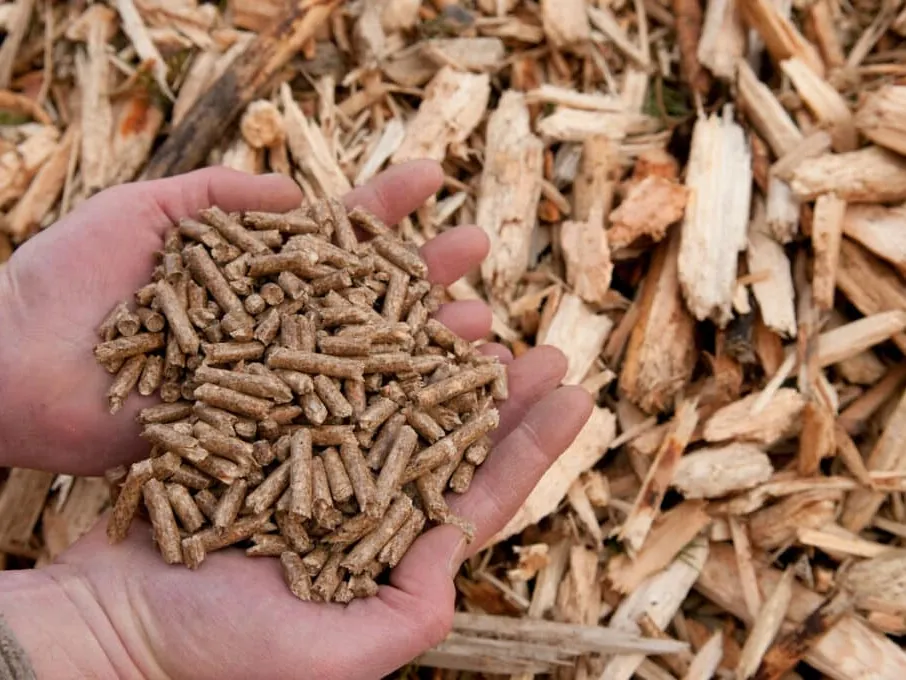
Biomass pellets are compressed solid fuel made from wood or agricultural residues. Industrial buyers burn them in boilers, for heating and in power generation, often as a replacement for other solid fuels.
Two main families
Wood pellets are made from sawdust and wood residue. They have low ash and a high calorific value, and they are the premium product. Agri-residue pellets are made from by-products such as rice husk, mustard husk, groundnut shell, cotton stalk, sugarcane bagasse and coffee husk. They cost less and have more ash and moisture.
Typical specifications
| Parameter | Wood pellets (premium) | Agri pellets (standard) |
|---|---|---|
| Moisture | 10% or less | 12 to 15% or less |
| Ash | 1 to 1.5% or less | 8 to 12% or less |
| Calorific value (NCV) | 4,200 to 4,800 kcal/kg | 3,500 to 4,200 kcal/kg |
| Diameter | 6 or 8 mm | 6, 8 or 10 mm |
| Length | 3.15 to 40 mm | 3.15 to 40 mm |
| Bulk density | 600 to 650 kg/m³ or more | 550 to 600 kg/m³ or more |
| Sulphur | 0.05% or less | 0.2% or less |
| Durability | 97.5% or more | 95% or more |
Coffee husk pellets, a Karnataka feedstock available after the harvest, are reported at around 3,800 to 4,200 kcal/kg with roughly 5 to 7 percent ash.
Standards buyers use
Wood pellets are commonly specified against the ENplus classes A1, A2 and B, where A1 is the premium grade. Agricultural pellets fall outside ENplus and are usually referenced against ISO 17225-6. Referencing a standard in a specification is not the same as holding certification, so ask what can be documented for the lot.
Sustainability, stated carefully
Biomass is a renewable solid fuel, but how sustainable a given pellet is depends on its feedstock and where that feedstock comes from. Agri-residue pellets use by-products. Some markets ask for sustainability or quality certification, for example SBP in the United Kingdom or ENplus A1 in parts of Scandinavia, and rules change. Check current requirements for your market.
Trade details
The HS code for wood pellets is 4401.31. Agri-residue pellets are classified differently, so confirm the code with your customs broker. Pellets ship in bulk or in one-tonne FIBC bags. Third-party inspection at loading, by an independent inspection company, is common and sensible for a fuel bought on calorific value and ash.
See the Biomass Pellets dossier for DVG's specifications.
Keep reading
- 01
Export Knowledge
FOB, CFR and CIF explained: Incoterms for sea freight
What FOB, CFR, CIF and EXW mean under Incoterms 2020, who pays for what, where risk passes and how to choose between them when buying from India.
- 02
Export Knowledge
FCL vs LCL and container loading for agricultural goods
Full container load or less than container load, how container weight and volume limits work, and why light products and dense products load so differently.
- 03
Quality & Sourcing
Why third-party testing matters in agricultural export
What independent laboratory testing and pre-shipment inspection give a buyer that a supplier's own report cannot, and how to specify them in a contract.
Questions about sourcing from India?
We read every enquiry. Tell us what you are looking for.