
Natural & Wellness Ingredients
Isabgol (Psyllium Husk)
Psyllium husk, powder, seed and granules in graded purity.
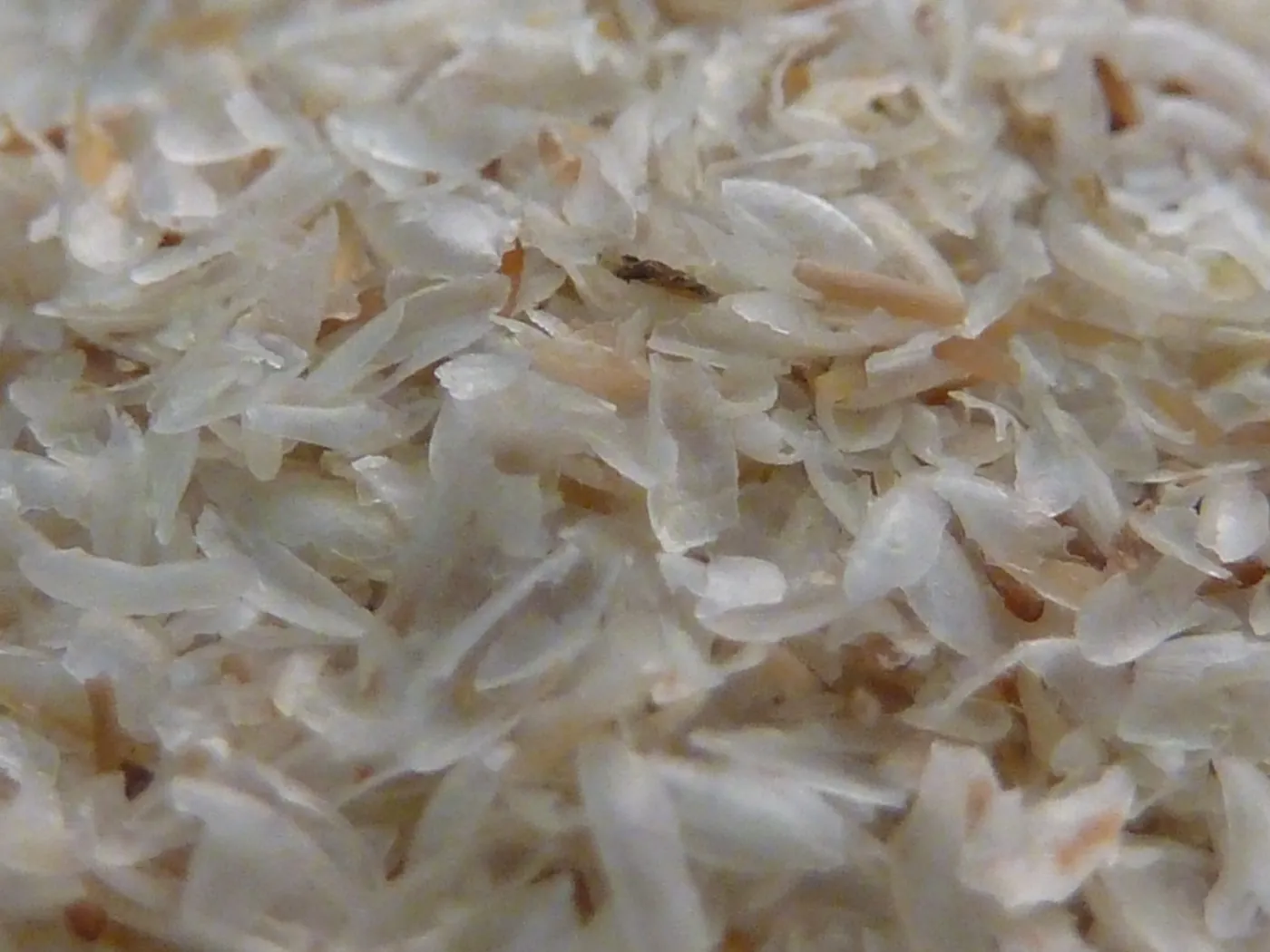
Photo: Bastique (Cary Bass), CC BY-SA 3.0, via Wikimedia Commons
Overview
Isabgol is the husk of Plantago ovata, an annual herb grown as a winter crop. It is traded internationally as psyllium husk, and its pharmacopoeial name is ispaghula. Buyers grade it by purity, which is the main price differentiator, and by the functional and testing parameters that matter for their end use.
DVG supplies psyllium husk for bulk export as whole husk, husk powder, seed and granules, in 85%, 95% and 98–99%+ purity grades. India origin.
Forms, grades & specifications
Purity is graded by husk content. Higher-purity husk typically shows a swell volume of about 35–40 ml/g or better.
Whole Husk (Flakes)
Cleaned, sieved husk, uncrushed. Typically bought by pharma and bulk fibre brands.
| Form | Cleaned, sieved husk, uncrushed |
|---|---|
| Typical buyer | Pharma, bulk fibre brands |
| Purity | 85% / 95% / 98–99%+ |
| Origin | India |
Psyllium Husk Powder
Husk milled to fine mesh, used by food and beverage manufacturers and capsule fillers.
| Form | Milled husk powder |
|---|---|
| Mesh | e.g. 40 / 80 / 100 mesh |
| Typical buyer | Food & beverage, capsule fillers |
| Purity | 85% / 95% / 98–99%+ |
| Origin | India |
Psyllium Seeds
Whole seed, husk not separated.
| Form | Whole seed, husk not separated |
|---|---|
| Typical buyer | Animal feed, some pharma extraction |
| Origin | India |
Granules
Semi-processed, instant-mix format.
| Form | Semi-processed / instant-mix |
|---|---|
| Typical buyer | Retail sachet brands |
| Origin | India |
Purity grades
85% purity
| Husk content | 85% |
|---|---|
| Typical use | Lower-cost commodity / industrial use |
95% purity
| Husk content | 95% |
|---|---|
| Typical use | Mainstream food and pharma use |
98–99%+ purity (“Sat-Isabgol”)
| Husk content | 98–99%+ |
|---|---|
| Typical use | Premium pharmaceutical / USP-grade supplement use |
Applications
- Pharmaceutical and nutraceutical: fibre supplement capsules and sachets
- Food: gluten-free baking, bakery binders, cereals and health mixes
- Industrial: textile sizing, paper and cosmetic formulations
Packaging & commercial
- 25 kg or 50 kg multi-layer paper / HDPE bags, palletised.
- FIBC (jumbo) bags of 500–1000 kg for bulk pharma buyers.
- Moisture-barrier inner liners (HDPE / LDPE), because psyllium is highly hygroscopic and will swell or cake if exposed to humidity.
- If wooden pallets are used, ISPM-15 fumigation compliance and certification apply.
Origin & sourcing
India supplies an estimated 80–90% of world psyllium output, with the crop concentrated in Gujarat and Rajasthan. Price discovery largely happens at the Unjha and Sidhpur mandis in Gujarat. These are industry estimates, and the origin of a specific lot is confirmed with the quotation.
Quality & documentation
- Purity is graded by husk content. Lot testing covers moisture, microbial limits (total plate count, yeast and mould, E. coli, Salmonella), pesticide residue, foreign matter, ash, particle size / mesh (powder) and heavy metals (lead, arsenic, cadmium).
- Buyers in the United States and the EU commonly ask about USP-grade specification, USFDA facility compliance, EU pesticide MRLs and traceability. Tell us which apply so we can confirm what can be documented for your supply.
- A Certificate of Analysis (COA) is available on request for each shipment.
Export information
- HS classification
- Psyllium husk is classified under heading 1211.90 (plants and parts of plants used in pharmacy). The exact 8-digit code can differ by form and should be confirmed with your customs broker.
- Documents
- Commercial invoice, packing list, Certificate of Origin, phytosanitary certificate, Certificate of Analysis, fumigation certificate for wooden pallets, and Bill of Lading.
- Samples and MOQ
- A small trial or sample is the usual first step before a container order. Minimum order quantity is agreed per enquiry.
Questions buyers ask
What is the difference between 85%, 95% and 98–99% psyllium husk?
The percentage is husk purity. 85% is a lower-cost commodity or industrial grade, 95% is the mainstream food and pharma grade, and 98–99%+ (often called Sat-Isabgol) is the premium grade for pharmaceutical and supplement use.
What is swell volume?
Swell volume (or swelling index) measures how much the husk expands in water, in ml per gram. It is a key functional metric, and higher-purity husk typically shows about 35–40 ml/g or better.
Why is moisture-barrier packing important?
Psyllium is highly hygroscopic. Exposed to humidity it swells and cakes, so inner liners, palletising and, on humid routes, desiccant are used.
Which form should I choose?
Pharma and bulk fibre brands usually buy whole husk, food and beverage makers and capsule fillers buy powder (40, 80 or 100 mesh), and retail sachet brands buy granules. Share your end use and we will suggest a form and grade.
Related knowledge
All Isabgol / Psyllium Husk articles
Other products
Ready to talk about Isabgol / Psyllium Husk?
Tell us the grade, quantity and destination port. We will confirm what we can supply.