
Sustainable Energy
Biomass Pellets
Wood and agri-residue pellets for industrial energy.
Overview
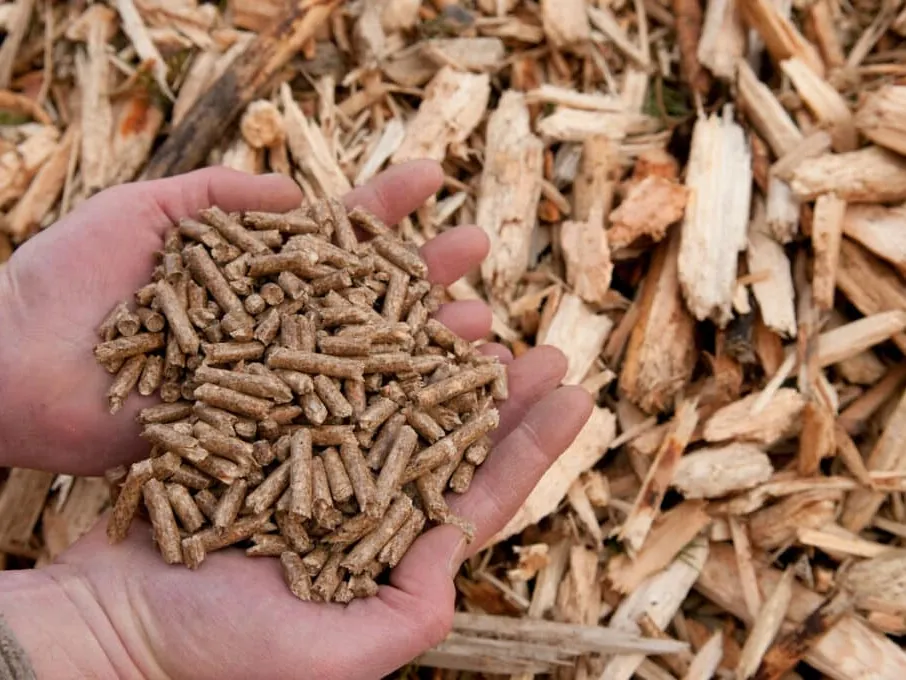
Biomass pellets are compressed solid fuel made from wood or agricultural residues. Industrial buyers use them in boilers, heating and power generation, and specify them by moisture, ash, calorific value, diameter, bulk density and durability.
DVG supplies premium wood pellets and standard agri-residue pellets, specified to the buyer's end use. India origin.
Forms, grades & specifications
Wood pellets are specified with reference to ENplus A1 / A2 / B classes and agri pellets with reference to ISO 17225-6. These are reference standards for the specification, not a statement that a given lot is certified.
Wood Pellets (Premium)
Premium wood pellets for heating and power.
| Moisture content | ≤ 10% |
|---|---|
| Ash content | ≤ 1–1.5% |
| Calorific value (NCV) | 4,200–4,800 kcal/kg |
| Diameter | 6 mm or 8 mm |
| Length | 3.15–40 mm |
| Bulk density | ≥ 600–650 kg/m³ |
| Sulphur | ≤ 0.05% |
| Durability | ≥ 97.5% |
| Origin | India |
Agri-Residue Pellets (Standard)
Agri-biomass pellets from residues such as rice husk, mustard husk, groundnut shell, cotton stalk, bagasse and coffee husk.
| Moisture content | ≤ 12–15% |
|---|---|
| Ash content | ≤ 8–12% |
| Calorific value (NCV) | 3,500–4,200 kcal/kg |
| Diameter | 6 mm, 8 mm or 10 mm |
| Length | 3.15–40 mm |
| Bulk density | ≥ 550–600 kg/m³ |
| Sulphur | ≤ 0.2% |
| Durability | ≥ 95% |
| Origin | India |
Coffee Husk Pellets
Agri-residue pellets from coffee husk, a Karnataka-origin feedstock available seasonally after harvest.
| Calorific value | 3,800–4,200 kcal/kg |
|---|---|
| Ash content | ~5–7% |
| Availability | Seasonal, post-harvest (Oct–Mar) |
| Origin | Karnataka, India |
Applications
- Industrial boilers and steam generation
- Heating
- Power generation
Packaging & commercial
- Bulk or 1-tonne FIBC (big bags).
- Container size, loading and shipment size are agreed per order.
Origin & sourcing
Biomass is a renewable solid fuel, and how sustainable a given pellet is depends on the feedstock and where it comes from. Agri-residue pellets use by-products such as husks and shells. Some markets ask for sustainability or quality certification (for example ENplus or SBP). DVG does not claim certification that is not in place; ask us what can be documented for a specific lot.
Quality & documentation
- Lab testing covers gross calorific value, moisture, ash, sulphur and chlorine, and third-party inspection at loading can be arranged.
- Lab reports and a quality certificate are available on request for each shipment.
Export information
- HS code
- 4401.31 for wood pellets. Agri-residue pellets are classified differently, so confirm the code with your customs broker.
- Documents
- Certificate of Origin, lab / quality report, Bill of Lading, and any destination-specific compliance documents.
- Samples and MOQ
- A sample can be supplied for testing. Shipment size and minimum order quantity are agreed per enquiry.
Questions buyers ask
What is the difference between wood pellets and agri pellets?
Wood pellets are a premium fuel with low ash (about 1–1.5% or less) and higher calorific value. Agri pellets, made from residues such as husks and shells, are a lower-cost standard grade with higher ash and moisture.
Which standards apply?
Wood pellets are commonly specified against ENplus A1, A2 and B classes, and agri pellets against ISO 17225-6. DVG uses these as reference points for the specification.
What should I tell you when I enquire?
Your end application, target moisture, ash and calorific value, pellet diameter, destination port and annual volume.
Related knowledge
Other products
Ready to talk about Biomass Pellets?
Tell us the grade, quantity and destination port. We will confirm what we can supply.