
Indian Products
Moringa leaf powder: quality parameters and grades
Mesh, moisture, colour, microbiology, heavy metals and pesticide limits for moringa leaf powder, and how food grade differs from nutraceutical grade.
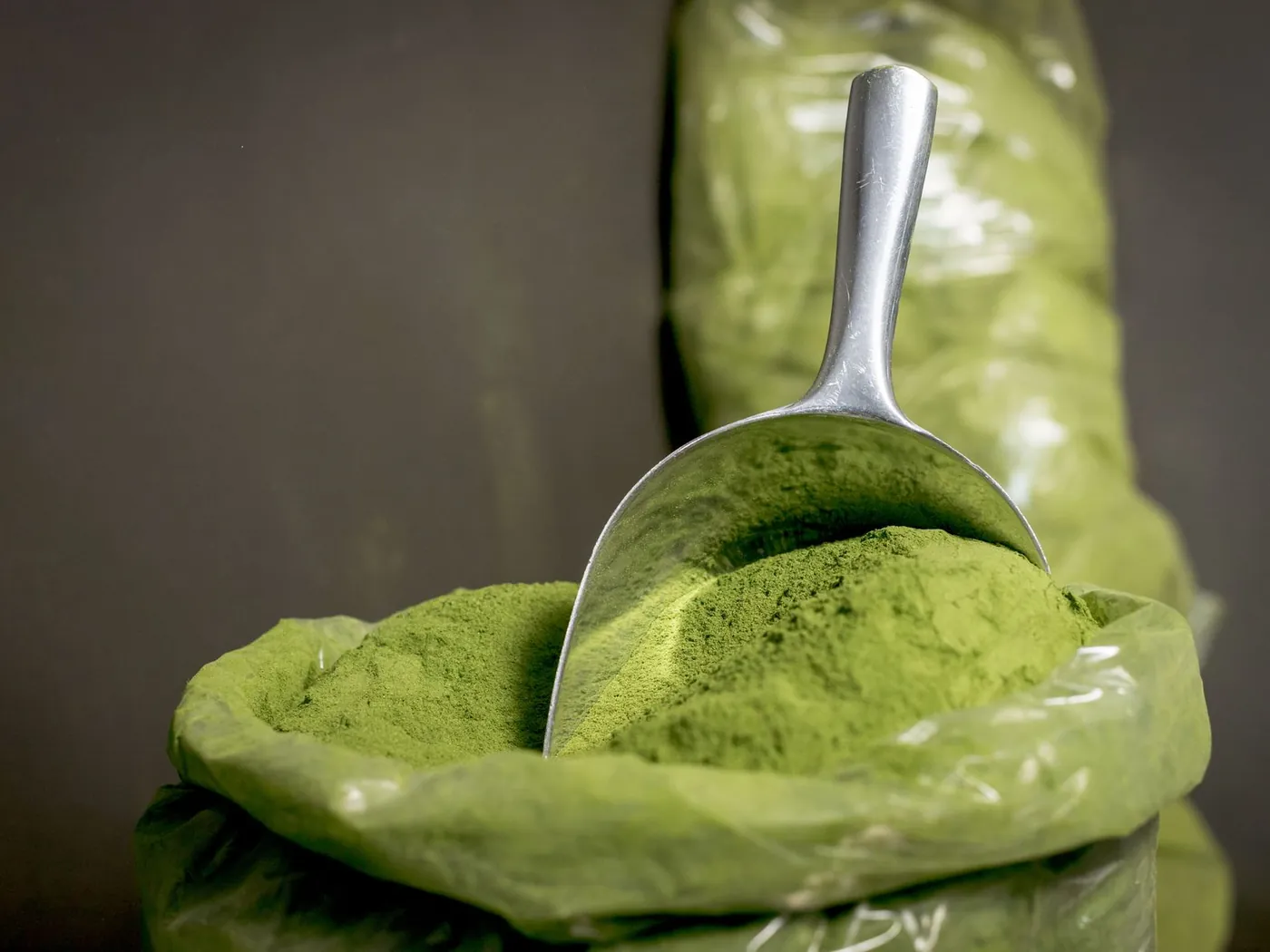
Moringa leaf powder is made from the dried, milled leaves of Moringa oleifera. It is a simple product with a demanding specification, because the same powder can be a culinary ingredient for one buyer and a supplement ingredient for another.
Typical export specification
| Parameter | Typical specification | Note |
|---|---|---|
| Moisture (LOD) | 7% or less | Some generic botanical specifications allow 10 to 12%. Lower moisture helps shelf life and prevents clumping and mould. |
| Particle size / mesh | 40 to 80 mesh (culinary); 80 to 100 mesh (supplement); 120+ (cosmetic) | Driven by end use, not by one fixed standard. |
| Colour | Bright, light green | Sun-drying degrades chlorophyll; shade or cold mechanical drying below 45°C preserves colour and active content. |
| Total plate count | 10⁷ cfu/g or less on generic dried-herb specifications | Supplement buyers often require 10⁴ to 10⁵. Treat the looser figure as a floor, not a target. |
| Yeast and mould | 10⁵ cfu/g or less | Baseline for a clean powder. |
| E. coli, S. aureus | Absent in 10 g | Baseline. |
| Salmonella | Absent in 25 g | Non-negotiable. See below. |
| Heavy metals | Pb 3 ppm, As 2 ppm, Cd 1 ppm, Hg 0.1 ppm (typical supplier specification) | Premium and EU buyers often want lead nearer 0.1 to 0.3 ppm. |
| Pesticide residues | EU default MRL of 0.01 mg/kg per compound where none is set | A short panel is not enough for EU buyers, who expect a broad multi-residue screen. |
| Aflatoxins | B1 5 ppb, total 10 ppb (common buyer benchmark) | Buyer-driven rather than a single global standard. |
Food grade versus supplement grade
These are effectively two products. Food grade meets baseline moisture, microbial and heavy-metal limits, uses a coarser mesh and is sold to tea and beverage blenders, ingredient traders and general food manufacturers. Nutraceutical or supplement grade uses a finer mesh, tighter microbial limits, a full heavy-metal and pesticide certificate of analysis on every lot, consistent colour and particle size, and often traceability to a farm or harvest. Be clear which one you are asking for, because the cost structure and the testing are different.
Why Salmonella gets special attention
In 2025 and 2026 the US Centers for Disease Control and the FDA investigated a Salmonella outbreak linked to moringa leaf powder imported from India, and import screening of Indian-origin moringa powder has since increased. The practical lesson for any buyer, in any market, is to ask for a certificate of analysis that is specific to the lot you are buying, and to specify Salmonella absent in 25 g.
Shelf life and packing
In airtight, moisture-proof packaging kept cool, dry and out of light, up to two to three years is technically achievable, and most suppliers label at 18 to 24 months to protect colour and potency. Bulk packing is usually 25 kg multiwall kraft bags with a food-grade liner, or PP woven sacks, and moringa powder is bulky, so a container fills by volume before weight.
Understand the units in Moisture, purity and mesh explained, and see our range on the Moringa Powder dossier.
Keep reading
- 01
Export Knowledge
Export documents explained
The documents that accompany an export shipment from India, what each one is for, who issues it and which ones depend on the product and destination.
- 02
Quality & Sourcing
Moisture, purity and mesh explained
Three numbers that appear in almost every agricultural specification. What moisture, purity and mesh actually measure, and how to specify them clearly.
- 03
Quality & Sourcing
Why third-party testing matters in agricultural export
What independent laboratory testing and pre-shipment inspection give a buyer that a supplier's own report cannot, and how to specify them in a contract.
Questions about sourcing from India?
We read every enquiry. Tell us what you are looking for.